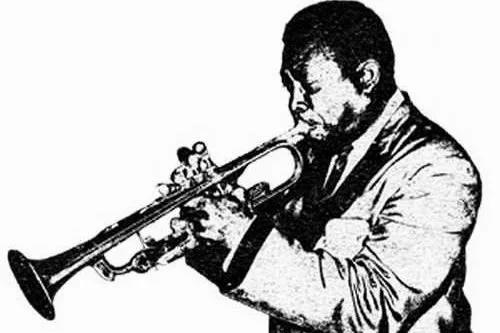
Oswald Frederick “Baba” Brooks
The Forgotten Giant of Ska
by Sergio “Da Prophet” Rallo
“Brooks is not heard on obscure tracks for obsessive collectors; rather, he is heard on some of the most famous Ska records of all time”
Sergio “Da Prophet” Rallo has a long and deep connection to ska. From 1998-2005 he curated Skabadip.com, the first Italian website exclusively dedicated to ska, and was a singer with SmartS, an 8-piece band in Milan (1992-2001). Today he spends his free time spreading the gospel of Baba Brooks and finding fresh converts - like me - every day. CB
Everybody has their own obsessions, right? Some people even have more than one, and among my many, I happened to develop one for Ska. Not that I look down on dozens of other genres; I love plenty of other music too. But, as the great and late Roberto “Freak” Antoni used to say, this is the genre that gives me that “spark in the socket.”
Within obsessions, there are also “sub-obsessions,” as every maniac out there knows perfectly well, and among my own personal sub-obsessions two names rightfully stand out: Donald “The Don” Drummond, the utterly insane trombone genius, and Oswald Frederick “Baba” Brooks, the explosive trumpeter who was one of the pillars of Ska during the four-year period between 1962 and 1966. Both musicians were already established artists on the Kingston music scene a few years before the Skatalites were formed — which happened only in the spring of 1964, before they broke up in August 1965. Drummond would later become an official member of the band, while Brooks would make several appearances as a “guest star” alongside some of them in recordings for Treasure Isle. But while we know almost everything about Don Drummond — who achieved legendary status both for his extraordinary talent and unique musical language and for having died by suicide* at a very young age — we know little more than a hill of beans about Baba Brooks, despite an equally unique style and a body of work that clearly makes him one of the most prolific, omnipresent, and therefore most important musicians of Ska’s earliest period, probably second only to the late and extraordinary Roland Alphonso.
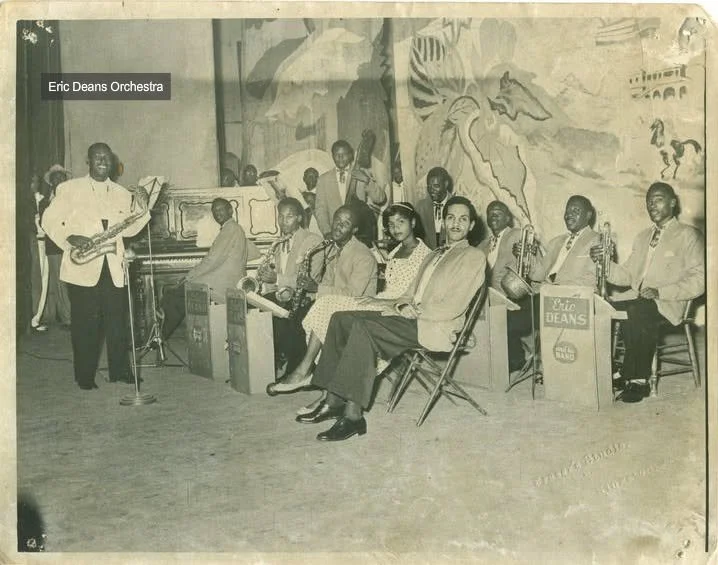
That “hill of beans” includes the following: a date of birth vaguely and unconvincingly given by various sources as “c. 1934 or 1935” but no place of birth (but I guess Kingston as a possible candidate); the beginning of his career and apprenticeship in the 1950s with the famous Eric Dean’s Orchestra, where they played everything — jazz, merengue, cha-cha-cha — alongside many other musicians who would later become famous, including Drummond himself; scattered reports here and there of successful South American tours with that same orchestra; a few children scattered around South America; and his very extensive output as composer, arranger, and accompanist for practically every Jamaican singer who might come to mind. Because he was, as I said, such a particularly prolific musician, and because his way of playing is immediately recognizable, it is not difficult to roughly reconstruct Baba Brooks’ musical path. This is despite the Jamaicans’ rather approximate way of listing session personnel and composers’ names, and despite the fact that there were several other active trumpeters at the time.
In any case, right from the dawn of Kingston’s recording industry, Brooks can be heard on dozens of Jamaican shuffle/boogie shuffle recordings from 1958 to 1961, especially for the young producer Duke “The Trojan” Reid. Many of those tracks appeared on CD for the first time fifty years later in the compilation Nuclear Weapon – Rare and Previously Unissued Early ’60s Ska, released by Trojan/Sanctuary Records in 2003. Brooks also worked for the “King Pioneer” label, behind which stood the famous pianist Theophilus Beckford, author of one of the first hugely popular pre-Ska songs, “Easy Snappin’.” Already tired of the meager money producer Coxsone Dodd had paid him for his famous song, Beckford had gone independent, producing his own music and that of other artists as early as 1960. Much of that material was released by Trojan/Sanctuary on the 2004 CD Trojan Battlefield, while five years earlier more 1961 Ska could be heard on the Jamaican Gold compilation Theo Beckford & Friend – Trench Town Ska from 1999. The latter is worthwhile because of the substantial number of musicians involved, all carefully listed in the notes: musicians who are little known, and whose importance in those fundamental years in which the new genre was taking shape I regret not knowing more about. In those years, Baba Brooks was therefore making a living both by recording for Reid and by playing live with Byron Lee’s Dragonaires, as well as by playing and recording with other groups. One of these was the renowned Trenton Spence’s Orchestra, with whom he recorded in 1962 one of his first personal successes: the wonderful cover of Artie Shaw’s “Jungle Drums,” retitled by Brooks as “Distant Drums.” It was also the first major popular success that launched producer Justin Yap’s newborn Top Deck Records label. “Distant Drums” is a timeless melody that shortly afterward would be reworked with a more Ska-oriented treatment as “African Blood” by Prince Buster, featuring the other great trumpeter of the Ska-mania era, Raymond Harper. Brooks also took part in the early recordings made by Leslie Kong for his Beverly’s label. Brooks thus established himself as a highly respected instrumentalist, built strong professional relationships with the producers and musicians mentioned above, and was on his way to becoming one of the most sought after musicians of all.
It is simply a fact that wherever our Baba went, he either scored hits or played a substantial role in launching the record, the vocal group, or the producer of the moment. Indeed, we find Brooks on the early recordings produced by Duke Reid, who, after a “period of reflection” lasting less than two years — during which he had suspended his competition with Seymour “Coxsone” Dodd — returned to the arena in 1963, with Brooks as his ally, producing a long series of hits that undoubtedly became some of the most iconic songs in the entire genre. In no particular order, and only as a non-exhaustive example, here are a few titles: “Rukumbine” by Shanley Duffus; “Run Joe” and “Rough & Tough” by Stranger Cole, the latter featuring a spectacular solo; “Dance Crashers” by Alton Ellis & The Flames, with another historic solo; “Carry Go Bring Come,” “Rub Up Push Up,” and “Botheration” by Justin Hinds & The Dominoes; “Little Did You Know” and “I Am In Love” by The Techniques; and “Renegade” by The Zodiacs. These are, without a doubt, some of the most beautiful and entertaining songs not only in Ska, but, in my personal opinion, in pop music in general. All the incredible, immensely powerful rhythms that define them are provided by the same studio band.
Among the forgotten heroes of this story, in fact, there is not only Baba Brooks, but also some of the true pillars of Ska’s golden age, variously and collectively credited as Baba Brooks’ Band, Baba Brooks and His Recording Band, Baba Brooks’ Orchestra or simply “Baba Brooks’ Studio Band.” The backbone of the group consisted of Arkland “Drumbago” Parks on drums, Nearlynn “Lynn” Taitt on lead guitar, Jerome “Jah” Jerry or Harold McKenzie on rhythm guitar, Roland Alphonso on tenor sax, and Lloyd Spence — son of the aforementioned Trenton — on bass.
And here I must open a long parenthesis, because I cannot help adding that this other wonderful musician, the sculptor of dozens of simple, pulsing bass lines that push everything forward “from underneath,” suffered the fate of disappearing behind the gigantic figure of the other bassist named Lloyd: the legendary double bassist Lloyd Brevett of the Skatalites. So do yourself a favor: listen again to Brevett, for example, on Drummond’s “Man in the Street” and “Confucius” with the Skatalites; then, again just by way of example, listen to Spence on Brooks’ cheerful “Twilight Zone” or on the dark, pounding “Flames in the Street,” or in Don Drummond’s “Thoroughfare” and you will never again be mistaken about who is playing bass on your favorite Ska records. Parenthesis closed.
Also present in Brooks’ band were Lester “Ska” Sterling and Stanley “Ribbs” Notice on sax, Don Drummond on trombone, and Gladstone Anderson, and possibly Winston Wright, on piano and organ. As is plainly visible, the band was certainly not some “patched-together” version of the Skatalites, as some people mistakenly believe. Some of their tracks were credited to Edward’s Allstars, Buster’s Allstars, Duke Reid’s Allstars, and so on, just as, later on, various members of the Skatalites would hide behind those same names. The producer remained the same. The musicians, however, often changed across all the lineups, and naturally there were many overlaps. In any case, Baba Brooks took part — with only Roland Alphonso, Johnny “Dizzy” Moore, and Don Drummond missing, but with Lloyd Knibbs, Lloyd Brevett, Lester “Ska-leg” Sterling, Jerome “Jah Jerry” Hines, and Tommy McCook present — in the only Jamaican recording session Laurel Aitken made in the summer of 1963 after his departure for London three earlier: about a dozen songs, recorded one year before the Skatalites were actually formed. The result was the album on which those twelve songs were later collected, titled “The Long Hot Summer of 1963”, credited with a certain degree of legitimate opportunism not only to Aitken but to the Skatalites too. It contains little gems such as “Bad Minded Woman,” “Lion of Judah,” and “Going to My Home Town,” and the rest of the recordings are an imperishable testimony to what those guys could do in half a day. They were the same guys who, less than a year later, after picking up a barely adolescent kid named Jackie Mittoo and placing him at the piano essentially just to play the offbeat, would become the Ska group par excellence: Tommy McCook & The Skatalites.
Returning to the flattering series of hits Brooks played on for Duke Reid, so far I have limited myself to Brooks’ work with solo singers and vocal groups. But of course, among the major commercial and popular successes were Brooks’ own instrumentals for Treasure Isle. And the same point naturally applies to the songs: when you listen again to the most famous instrumentals, you realize that some pieces played by the Baba Brooks’ Band became iconic examples of Ska in its two different forms: the bright, frantic, joyful Ska in major keys, and the hypnotic, smoky, meditative Ska in minor keys. One need only mention titles such as “Teenage Ska,” “Stampede,” “Guns Fever,” “Vitamin A,” “One Eyed Giant,” “Alcatraz,” “Girls Town Ska,” “Musical Communion,” “Twilight Zone,” “Western Flyer,” “River Bank,” and “Musical Store Room” — the last two with practically all the Skatalites in place — to see that Brooks’s contribution to Jamaican music was second to none. Many of the “bombs” are credited to Brooks and Drummond, who between 1963 and 1965 had an intense and fruitful collaboration.
Aside the aforementioned “Thoroughfare”, “Dr. Dekker” and “University Goes Ska” are just two of Don Drummond’s masterpieces with Baba Brooks’s Band for Treasure Isle. In between, however, there were also a good number of instrumentals that our man actually recorded with a large part of the Skatalites, both for Treasure Isle — see the album “Tribute to the Ska-talites”, Esoldun 1991 — and for King Edwards. Then, if we look into the house of another Chinese-Jamaican producer — besides the aforementioned Yap and Kong — namely Mr. Victor “Randy” Chin, who, like other merchants, had thrown himself into the music business, we find that Brooks immediately recorded a successful record for him and his newly founded Randy’s label as well. I am talking about the beautiful, relaxing “Portrait of My Love,” a successful Ska version of a syrupy 1961 song, used a few years ago as the theme in a Volkswagen Up commercial. And here I can have some fun recalling a few more of the long series of successful covers by Brooks and his band: “Watermelon Man” by Brubeck; “Baby Elephant Walk” by Mancini; then “Independence Ska” — that we all know is a cover of Mongo Santamaría’s “El Pussy Cat,” recorded some time before Roland Alphonso and the Soul Brothers (the new recording band for Coxsone Dodd after the Skatalites had just broken up with McCook going to play for Tresure Isle with his Supersonics) made a different version titled “El Pussycat Ska”; and then “Magnificent Ska,” based on the theme from the western “The Magnificent Seven”, which, incidentally, boasts one of the coolest solos Lynn Taitt ever played.
Ah, another little thing must necessarily be said again to underline the remarkable importance of Mr. Taitt in the history of Jamaican music not only the more commonly acknowledged importance he had in shaping the transition from Ska to Rocksteady. Few people know, in fact, that one of the sonic characteristics of reggae, namely the lead guitar filling the spaces with riffs identical to the bass line, was invented precisely by the Trinidad-born guitarist Taitt. As people in Italy say these days when they want to point out something truly significant: “major stuff indeed” (tanta roba!). Another significant thing about Baba Brooks is what I mentioned at the beginning: Brooks is, just like his friend Roland Alphonso, everywhere. You find him on recordings by the Granville Williams Orchestra — “Santa Claus Is Ska-ing to Town,” “Popeye Ska,” “The Jerk.” You find him as Prince Buster’s right-hand man — important enough to appear in all four cover photos — on the album “Hard Man Fe Dead”. For Buster, Brooks would also create, again hand in hand with Drummond, “Islam,” “Pink Night,” and “Hey Train.” You find him at Federal Studios recording, as part of Byron Lee’s large Dragonaires lineup, Keith & Ken’s “Jamaica Ska,” Eric “Monty” Morris’s “Oil in My Lamp,” The Maytals’ “It’s You” and “What’s on Your Mind,” The Blues Busters’ “Donna,” “Behold,” and “Wings of a Dove,” or Jimmy Cliff’s “Ska All Over the World,” along with many others that would turn into a mere list. Brooks is not heard on obscure tracks for obsessive collectors; rather, he is heard on some of the most famous Ska records of all time, often as composer or co-composer, and certainly as arranger of the horn section.
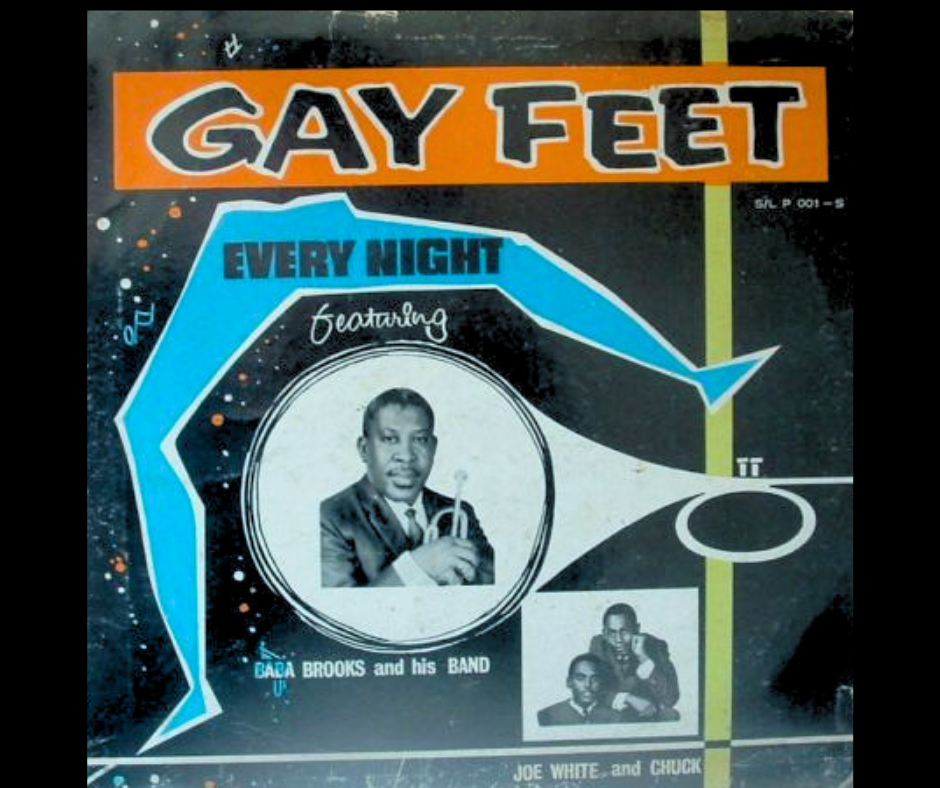
Captured live, including in a couple of close-ups, Baba Brooks appears in the video recorded in 1964 for British television, later released on videotape as “This Is Ska” only in 1989. And it was Brooks who, that same year, left for New York and the 1964/1965 World’s Fair as part of the official Jamaican government delegation, as a member of the aforementioned Byron Lee’s Dragonaires, together with his friend Prince Buster, to introduce Ska to the world. As if that were not enough, between 1964 and 1965 Brooks also worked for Vincent “The King” Edwards (with Reid and Coxsone they were collectively named the Big Three), who, before entering national politics and after having run seven different sound systems in every corner of Jamaica for almost a decade during the golden age of American music, resumed activity in the music field by relying precisely on Baba Brooks. Joined as usual by his friend Taitt, Brooks produced for The King his masterpiece “Shank I Shack,” which became the producer’s first real hit. The theme, the rhythm, and the solos by Brooks and Taitt became legendary and influenced the music of the following decade, practically becoming a “standard” of Jamaican music, repeated in every possible form even in the digital era. For King Edwards, during that same period, Brooks recorded other engaging, cheerful, and catchy Ska numbers such as “Bus Strike” and “Dr. No” — a cover of “La Paloma” — often under the collective name Edwards All Stars. Under that same name, he also accompanied Shanley (aka Chandley) Duffus on his overwhelming “Stumblin’ Block,” “One Morning,” and “Heariso.” Also in 1965, Brooks began working for the Gay Feet/High Note label of the Pottingers, who at the time were among the island’s largest record distributors. For the record, his place at Treasure Isle was taken by Tommy McCook with his Supersonics. For Gay Feet/High Note/Tip Top labels, Baba Brooks — still accompanied by Drumbago and Lloyd Spence in the rhythm section — not only backed various singers, but also produced some of his most successful instrumentals, including the effective cover of “Makin’ Whoopee,” made famous by Eddie Cantor in the musical of the same name, retitled “King Size Ska.” That track would also give its title to a popular Trojan compilation from 1998. Other examples include “Faberge” and the wonderful “First Session,” in which, along the lines of “Shank I Shack” — a long instrumental theme followed by crackling solos — Brooks and Taitt try again to achieve the same success with two of the most beautiful solos in Ska. Ballads, slow numbers, mento, and calypso also fall within the genres Brooks handled with skill. For the same label and producer Sonia Eloise Durrant, the only female record producer in Jamaica who went down in history with the surname of her husband from whom she had separated a year earlier: Pottinger. The only album credited to Baba Brooks will be made by her: “Every Night Featuring Baba Brooks and His Band”, Gay Feet 1966. In short, if not the single busiest musician of all, Baba Brooks was certainly among the most active instrumentalists of Ska’s four-year period, as well as, surely and by full right, one of the founding fathers of the genre, given his “percussive” use of the trumpet, almost always in the background, marking the offbeat or repeating riffs with effects similar to the famous offbeat sax of Dennis “Ska” Campbell, with whom he competed in stamina and timekeeping. As far as I am concerned, Baba Brooks was certainly the first Jamaican trumpeter to insert the trumpet offbeat into the rhythm of the early boogies, and for a musical genre partly defined by precisely that feature, this is no small thing.
Despite all this — despite his undeniable local record successes, despite the fact that his counterparts such as Alphonso and McCook and his closest collaborators such as Taitt and Anderson went on with their careers, laying the foundations of Rocksteady and all subsequent Reggae — from 1967 onward every discographic trace of Baba Brooks and his Studio Band disappears. Drumbago died at only fifty in 1969, the same year as Don Drummond’s suicide. Jerry Hines stopped playing and withdrew from the music scene. End of story. The last recordings on which the name Baba Brooks Band or His Recording Band may still appear — though our hero’s trumpet can no longer be heard — are precisely for Gay Feet in 1967, around the same time that another famous trumpeter, Jo Jo Bennett, began playing for Sonia Pottinger with his Fugitives, and also for Prince Buster on some Rocksteady records, though again with no more solos. From 1968 onward, there is not a single recording on which one can once again hear his crackling staccato, his sometimes long and raucous notes, his “roar,” his growls, those quick flashes of rapid notes that made up Brooks’s signature. Was the slowing down of the rhythm simply too much for someone like Brooks, who was used to riding 130 or 140 bpm with the agility of a squirrel, so that it finished him off? Joking aside, the Web is full of nonsense about Brooks. On some websites dedicated to reggae music one reads that he emigrated to America and later played under the nickname “Baba Leslie.” I checked, and it is not true: that Baba Leslie has nothing to do with him. Elsewhere one reads that he continued making music into the 1970s, and that is not true either. However hard one looks, the only real information one can find online is the kind that can be verified and that concerns, for example, one of Brooks’s charming and distinctive traits: his habit of introducing many of his own pieces — especially for Duke Reid — by declaiming the title. Sometimes it is him, sometimes someone else, in my opinion. Beyond that, absolutely nothing more is really known about Brooks. The only recent piece of information I found about Brooks dates back to 2016, when in Kingston he was posthumously recognized as one of the “Greats” of Jamaican music, together with his colleague Raymond Harper, as part of an annual event appropriately titled “Tribute to the Greats.” This at least confirmed my certainty that my hero had already been resting in peace for a long time. I must admit that, although I was lucky enough to meet and spend time with many of the founding fathers of Ska, I never took the opportunity to interview my victims about their colleagues. There was always so much to talk about; Jamaicans, moreover, prefer to talk about themselves rather than others, and it felt wrong to ask questions about third parties. But today I regret having only touched on the subject with Laurel Aitken, Justin Hinds, or Prince Buster, to name a few, and I feel rather stupid about it. In fact, not even knowing whether Brooks was born in Kingston, where he learned to play the trumpet, what schools he attended, whether he was married, and when and how he died — given the stature of the man — makes me a little sad. In none of the many “bibles” of reggae is anything about Brooks mentioned, beyond the mere citation of his name. And then seeing many of the pieces he created wrongly attributed to others — even if they are attributed to the Skatalites and not to “Jimmy and His Tires” mind you — strikes me as a continuous insult to the memory of a musician who was fundamental to Ska, and I do not find that right. Especially because Brooks is rather singular in himself for another reason as well.
When I first listened to Brooks, already being a jazz fan and loving a few trumpeters – from Armstrong to Lee Morgan - I realized he was quite different from the various trumpeters I listened to before. Unlike Johnny “Dizzy” Moore, who was clearly inspired by Gillespie’s bebop, or Raymond Harper, whose references in American jazz were obvious, just as those of Alphonso, Sterling, and McCook are obvious, Brooks seems to come from another planet. Perhaps from another continent. In certain quick flashes, he reminds me somewhat of the way the trumpet is used in certain Mexican traditional music ensembles I have listened to. For this reason, specifically for this article, I thought it appropriate to consult Giacomo Marsòn, the former trumpeter of my old band, The Smarts. Besides being a refined jazz musician who has shared the stage with some of the historic formations of Milanese jazz, he is himself a fan of jazz, music history, and — needless to say — trumpeters. Well, when asked about possible American jazz references in Brooks’s style, after listening again to a few tracks, Giacomo could only conclude that, in his opinion — and I quote literally: “Putting Baba Brooks into a jazz category is impossible. Even less does he bring to mind any American trumpeter he might have been inspired by. The simplicity of his phrasing — which, incidentally, I consider a virtue and not a flaw — the fact that he plays very much on the chords, which are simple, the range of notes he plays, and his use of certain effects, such as the growl, might suggest New Orleans Today, a genre that developed in New Orleans from the late 1940s onward and has an interesting history…”
There is something unique and particular about this little-known giant of Ska music, and it is not only his style and phrasing, which cannot really be traced back to American artists. Brooks, for example, never worked for Coxsone Dodd. Evidently, if his friend Theophilus Beckford had wanted nothing more to do with Dodd as early as 1960, he must have had his good reasons, and in my opinion Baba Brooks simply never wanted to work for him. Or perhaps it was just pure coincidence — a coincidence which, however, somehow supports the judgment expressed in a recent interview by the last survivor of the Ska sound system era, the aforementioned Vincent Edwards: “Coxsone?... I don’t want to describe him. But he’s a selfish fellow. Coxsone is ‘I,’ ‘money,’ ‘me.’ ‘I must do everything.’” In any case, it is truly strange that to this day no one has ever deigned to devote an official exclusive compilation to him and his Studio Band, as has happened for almost all the leading figures of the genre — and as it is now certainly time to do for Oswald Frederick “Baba” Brooks as well.
Sergio “Da Prophet” Rallo Recommended Discography:
Prince Buster – Hard Man Fe Dead (1967)
The Techniques – Little Did You Know (1965)
The Maytals – Sensational Ska Explosion (1966)
Laurel Aitken & The Skatalites – Long Hot Summer 1963
Justin Hinds & The Dominoes – Peace & Love, Trojan 1998
V.A. – King Edwards: Ska Volution
Ska Ba Dip; Skalutations; Man About Ska Town
Trojan Records – King Size Ska, 1998
Nuclear Weapon, Trojan/Sanctuary 2004
Every Night Featuring Baba Brooks and His Band, Gay Feet 1966
Shufflin’ on Bond Street, Trojan 1994
Monkey Ska, Trojan 1993
Music Is My Occupation, Trojan 1988
Tribute to the Ska-talites, Esoldun 1991
Skatalites and Friends – Hog in Cocoa, Esoldun 1991
and, last but not least, the very recent Ska Rarities, an absolute must, totaling a libidinous 84 tracks — not all of them exactly “rarities” for seasoned listeners — where Brooks’ band truly takes the lion’s share. Trojan/Sanctuary Records, 2019. Enjoy the listening and stay Ska. Milano 16/11/202
*This is one theory. For a detailed discussion of Dummond’s death, see Don Drummond: The Genius and Tragedy of the World’s Greatest Trombonist by Heather Augustyn - CB
Here’s one of the rarest photo I [Sergio] found on line more or less in the same time I was writing the article. This is really a wonderful and precious photo that portrays the late 1950s Eric Dean's Orchestra with second from the right a smiling Baba Brooks in splendid shape clinging to his trumpet. In the background a very young Lloyd Brevette on double bass and on the very left a nice and smiling Eric Deans. All the history and merits of this forefather of entertainment music in Jamaica and South America is summarized in this great site from which the photo was extracted.